Thursday, April 17, 2008

Environment Science: Paper or Plastic?


Paper or Plastic? Tried of that question? Which answer is more friendly to the planet? What if you could have a bag that is tough , long lasting and fits in your pocket? Try a "Chico Bag"! These bags are reusable, strong and colorful. They fit in your pocket or purse. They are great for shopping trips, quick errands, and even Halloween trick or treat sacks.

Environmental Sciecne: The Plastic Ocean


Every year millions of pieces of plastic find there way into the ocean as trash. Some pieces are wash into the ocean from runoff, storm drains, or discarded articles on the beach. Other pieces are from trash intentionally dump by fisherman, cruise liners, cargo ships, and other ocean going vessels. The oceans' currents eventually take this plastic flotsam to the middle of the ocean forming a mass of debris that cover millions of square miles. Captain Charles Moore has made a study of these floating masses of debris and here is his story.

Trashed:
Across the Pacific Ocean, Plastics, Plastics, Everywhere


Would you like to know more? Please take the time to listen to the audio stories as well.

Navigating the Pacific's 'Garbage Patch'
Garbage Mass Is Growing in the Pacific
Floating toxic plastic garbage island twice the size of Texas
Photos of a Plastic Ocean

Monday, April 14, 2008

Tuesday, April 08, 2008

Physics: Optics Stereographic Images


In our discussion of parallax I mention that stereographic images produce a 3D effect when viewed with a Stereographic viewer like a Viewmaster. However a similar effect can be done using an animated gif File and a computer.

Stereo Images: Time for Space Wiggle

Physics: Head Tracking, Optics, and Computer Science

This is just so cool I had to post it.

Head Tracking on the Wii.


Not to be out done here is a head tracking clip done on a PS3 running Linux

Environmental Sciecne: What's really in your Water?

It seems that all the drugs we are taking are making their way into the water supply of the planet. The water pollution control systems just don't handle drugs, hormones and chemicals we put in to our bodies and Flush down the toilet. Everything ends up in the water. Guys if you are feeling less virile and ladies if everyone seems to be more feminine, maybe it's not just you. Could it be something in the water?


Want to learn More?

Is Fatherhood In Peril?

Estrogen-Related Hormone Found In SF Drinking Water

Study: Antibiotics, Anti-Depressants, Estrogen In Drinking Water

I'll Have the Water With Estrogen, Please.

Monday, March 31, 2008

Just a Reminder!

Remember: I'll be out of town on Monday March 31st and Tuesday April 1st. So, No Class! Yippie!

Sunday, March 02, 2008

Homework Deadline Revised!


ALL HOMEWORK FOR THE WEEK IS DUE ON FRIDAY BY NOON

Thursday, February 21, 2008

Environmental Sciecne: Driving Green


How much is your carbon footprint as you drive?
Calculate Your Impact

Environmental Science: How Much Carbon is in Your Food


NPR's Fresh Air had a wonderful story about the greenhouse gas cost of raising food. Is it more environmentally friendly to buy apples from Washington State or apples from New Zealand?

You might want to give the piece a listen:Michael Specter: Count Carbon Along With Calories

Tuesday, February 19, 2008

Tuesday, February 12, 2008

Environmental Science: Food Cost Rising


More people around the world are eating meat than ever before. That coupled with raising fuel cost and the demand for ethanol are just some of the factor increasing your grocery bill.

Food Prices Surging, Raising Hunger Concerns

On Point: The Soaring Price of Food

Wednesday, February 06, 2008

Muscatine Community College Closed! 2/6/2008


Axel and Roxas Comic: Snow Day by *Silverookami on deviantART

WOOOHOOO! Snow Day! The College is closed today! We will see you on Thursday. Thursday and Friday Exams are still on! Use the day to study. :)

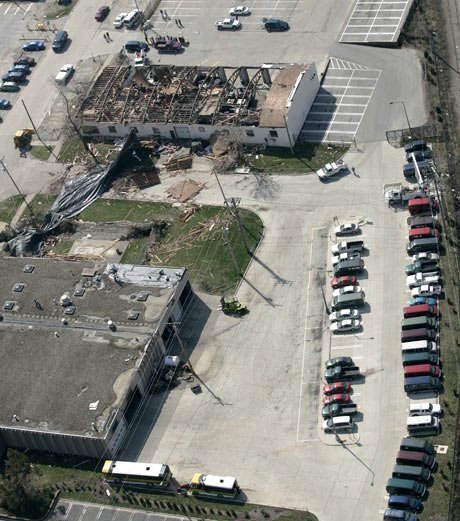
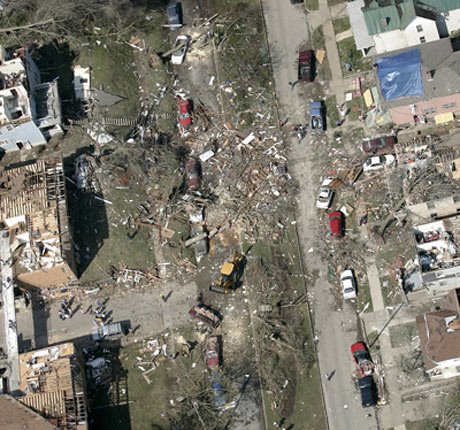
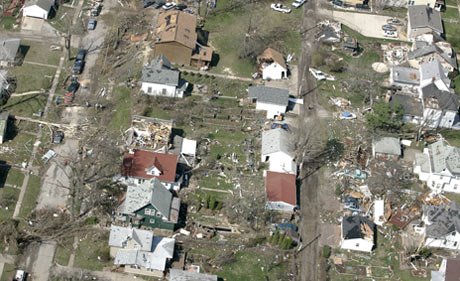
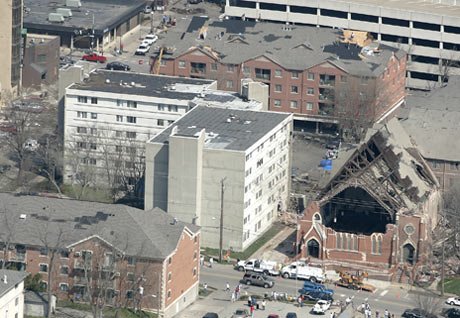
Meteorology: Killer Tornadoes


Killer Tornadoes ripped through the Southern United States leaving many homeless and some dead.

Tornadoes sweep U.S. south, at least 26 dead

Tornadoes tear across Southern states, killing at least 27

Tuesday, February 05, 2008

Friday, February 01, 2008

Meteorology Schedule Upated!


I'm just batting a 1000 here!

Please take the time to download and read the new Schedule for Meteorology Spring 2008: MET Spring 2008 Schedule(pdf)

Why some humans should not breed.


Yes, that is a power strip floating on two sandals.

Questions?

What are you cooking that is so important that you need an electric grill in the middle of a pool?

How much beer do you need to drink, so this seems like a good idea?

Wednesday, January 30, 2008

Sustainable Investing


Feel the power of Exponential Growth.

What would happen if you could save $1000 every year for 40 years at 2%. After 40 year and no withdraws you would have $62,000. What if you could do $2000 at 8% for 40 years? How does $600,000 sound to you?

Check out the numbers...

Investing.pdf

Tuesday, January 22, 2008

Environmental Sciecne: Updated Schedule


Please take the time to download and print the new Environmetal Science Schedule for this spring.

Environmental Science Schedule Spring 2008

Tuesday, January 15, 2008

Welcome Back Spring 2008

Environmental Science - Cloning

Would you eat a Cloned cow hamburger?

The FDA says it's safe.

F.D.A. Says Food From Cloned Animals Is Safe

Tuesday, October 02, 2007

A Bedtime Story


An Adult Nightmare: New York City will vanish in a pillar of nuclear fire within four years.

All the pieces are in place, if you choose to pay attention. The biggest hurdle was cleared by Iran just last month when they announce that Iranian scientist have succeeded in producing a “small” amount of enriched uranium. This is “THE” big step to creating a nuclear weapon. It’s not the engineering, the cost, the time, the effort, or the will. Getting the Uranium is the battle. First let get a crash course in Modern Physics 101.

Uranium is a naturally occurring element that comes in several different isotopes (flavors, if you will). Chemical they are all the same, but some have more neutrons in the center of the atoms than others. The two isotopes we are most concerned with are Uranium 235 (U-235) and Uranium 238 (U-238). For every thousand uranium atoms only seven of are U-235, so only about 0.7% of naturally occurring uranium atoms can be used for fission. Since theses two types atoms are chemical the same, you have to find a way of physical separate them. U-238 is slightly heavier than U-235. So you can separate the flavors of atom physically by weight (mass). In the past, this would take a lot of work. (It took the United State over two years scrap enough U-235 together for the first atomic bomb dropped on Hiroshima.) This is no longer the case due to a very clever scientist named Gernot Zippe. He came up with the bright idea to take Uranium and convert it into a gaseous from, Uranium Hexafluoride, then sort the uranium by weight. This is what a gas centrifuge does. By spinning the uranium gas, the lighter U-235 can be separated from it’s non-fissionable sister U-238. The act of concentrating fissionable nuclear material is called enrichment.

Most light water reactor require 5% of the uranium in a fuel pellet to be U-235, that is called enriched uranium. There are some other types of reactors that need the concentration of Uranium 235 to be as high as 20 percent and weapons grade uranium is 90 percent U-235. Gathering the material is the hard part, building a atomic weapon is trivial, especially if you don’t have to put it in a plane or in the nose cone of a missile.

The simplest atomic weapon is a gun type bomb, sillier to the device use at the end of the Second World War. Basically, you take two large pieces of Uranium 235 and smash them together. One piece is the target. The other piece is the “bullet”. You can smash the “bullet” into the target by using high explosives. What makes this design so dangerous is how simple it is. The whole weapon would fit very nicely into a standard shipping container. Even if you completely mess up the design the explosives will scatter the uranium all over the place contaminating hundreds of square city blocks. If the device works the death toll could be in the hundred of thousands if not millions.

I’m not saying Iran, Iraq, or any other nation would be stupid enough to destroy a major city. However, having a less than stable nation producing large quantities of uranium 235 without very tight regulation and safe guards would be a very bad idea.

Building a weapon is no problem. Getting it in a shipping container is just a matter of bribing a bored, greedy longshoreman. Just tell him it x-rated DVD’s and he’ll let it right through. Just take the example of the Chinese foreign nationals who smuggled themselves into Seattle. This certainly put a new spin on a foreign company trying to get a contract to run some of the United States largest shipping ports.


Maybe I’m just paranoid.


One thing I forgot to mention is how useful Uranium 238 can be. Normally, U-238 is not fissionable. However, that does not make it worthless. A quick look at any periodic table will tell you that all the elements listed after Uranium are artificial, in other words there are created in a breeder reactor or particle accelerator. These transuranium elements all start with a base of Uranium. By bombarding a target Uranium atom with neutrons or alpha particles you make the all the elements heavier than Uranium. All of theses elements are highly radioactive and some or so unstable they only exist for fractions of a second before decaying into something more stable. However, there are some useful products gained from this process. The most useful of theses transuranic element is fissionable Plutonium. A breeder reactor converts Uranium (or Thorium) into Plutonium. Plutonium can be used in reactors for power, or for making nuclear weapons. (Aside: The second atomic weapon used by the United States in World War II was a plutonium device, the infamous “Fat Man”.) What makes Uranium-238 so useful is the fact it can be used in a breeder reactor to make Plutonium.

Have a nice day. Please continue consuming the caffeinated beverage of your choice.

Environmental Sciecne: Cool Business in Japan

Japan has found a way to dramatically cut their Carbon Dioxide greenhouse gas emissions. They have turn off the air conditioning in the workplace and encouraged their workers to dress down, giving up the "salaryman" business suit.

Read and listen the the NPR story

Japan Trades in Suits, Cuts Carbon Emissions

Thursday, September 27, 2007

Environmental Sciecne: Could you live as a Freegan?


Freeganism
From Wikipedia


Freeganism is an anticonsumerism lifestyle where people employ alternative strategies for living based on "limited participation in the conventional economy and minimal consumption of resources. Freegans embrace community, generosity, social concern, freedom, cooperation, and sharing in opposition to a society based on materialism, moral apathy, competition, conformity, and greed." The lifestyle involves salvaging discarded, unspoiled food from supermarket dumpsters that have passed their expiration date, but are still edible and nutritious. They salvage the food not because they are poor or homeless, but as a political statement.

Many freegans get free food by pulling it out of the trash, a practice commonly nicknamed dumpster diving in North America or skipping in the UK. Freegans find food in the garbage of restaurants, grocery stores, and other food-related industries, and this allows them to avoid spending money on products that they claim exploit the world's resources, contribute to urban sprawl, treat workers unfairly, or disregard animal rights. By foraging, they believe that they are preventing edible food from adding to landfills and sometimes feed people and animals who might otherwise go hungry.

Instead of buying industrially grown foods, wild foragers find and harvest food and medicinal plants growing in their own communities. Some freegans participate in "Guerrilla" or "Community" Gardens, with the stated aim of rebuilding community and reclaiming the capacity to grow one's own food. They claim to seek an alternative to dependence and participation in what they perceive as an exploitative and ecologically destructive system of global, industrialized corporate food production.


Articles on Freegans

Freegan Ride: One month as a Freegan

Diving for Dinner

Not Buying It

Freegan Links

Freegan.Info

Feeding the hungry

Second Harvest

Thursday, September 20, 2007

Environmental Science: China's Population


What is the current population of China? Check out the China Population Clock!

What about India? India's Population clock

Environmental Sciecne: Sustainability


Consumer Consequences - Are you living a sustainable life? (Play the Game)

What would the Earth be like if everyone lived like you. Depending on your choices how many Earths would it take to sustain your lifestyle.
Tuesday, September 18, 2007

Here is the PDF (adobe Acrobat) File Why Do Humans have Sex?

Sunday, September 09, 2007

Mutations and Four Leaf Clovers


It turns out 1 clover in 10,000 is a Four-Leaf Clover. This is sometimes called a somatic mutation, a mutation that cannot be passed on to it's descendants. Whether this mutations is from radiation or environment is still debated today.

Other Mutations of Notes

Extra Nipples
Extra Fingers
Sickle Cell
Cystic Fibrosis
Tay-Sachs

Kobe Beef

So what make Kobe Beef so expensive? Maybe it's all that beer the Japanese feed the cow or maybe it's that daily massage?

Kobe Beef: Prime stock gets beer and massage

NIKON Small World Competitions

Hey! Look it's a mouse Colon! Winners for the 2007 Nikon Small World Competition will soon be announced!
2005 Nikon Small World Winners

2006 Nikon Small World Winners

Tuesday, September 04, 2007

Environmental Science: Eating the Land

Depending on what the cow eat the taste of the cheese can vary a great deal. The changing climate around the worlds has altered many of the plants farm animals graze upon. Their changing diet alter the taste of the milk they give and the meat of the animals themselves.

Listen to the NPR story: Cheesemakers Taste a Change in the Weather.

Wednesday, August 29, 2007

Good Bye Baiji Dolphin

Once again another species has been kicked off the planet. The Baiji Dolphin of China has fallen prey to habitat extinction in the Yangtze River. Damming and overfishing of the river has ruined the once pristine river, thus destroying the only home the dolphin has.

Requiem for a Freshwater Dolphin

Saturday, August 11, 2007

Coal Mining

Current state Mining in the World form Wikipedia

Mining Accident

Comparing Mining in the U.S. , China and the world.

Listen to the NPR news item

Sunday, May 06, 2007

Gliese 581c


Scientist have found the most Earth-like planet to date.

Gliese 581 c

This is an artist rendition of Gliese 581 c taken from Astronomy Picture of the Day.

Friday, May 12, 2006

Darfur is Dying

Read the news: Darfur

Play the game: Darfur is Dying

Maybe you will understand what is going on in the world.

Tuesday, May 09, 2006

Environmental Sciecne: Where will your computer end up?


What happens to your computer when you throw it out?

GOTTA GET GREEN in the March 2006 of CPU (Computer Power User).

Sigourney Weaver urges Women into Science

And it's About time too!

Read it here: Sigourney Weaver urges women to study science

FYI: Did you know that the EICCD's current enrollement is 60%. In some college across the United States this number is closer too 75%. Even with these numbers women are underrepresented in most science, math and technology classes.

Tuesday, April 18, 2006

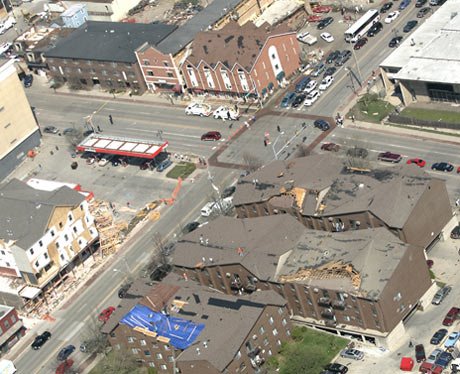
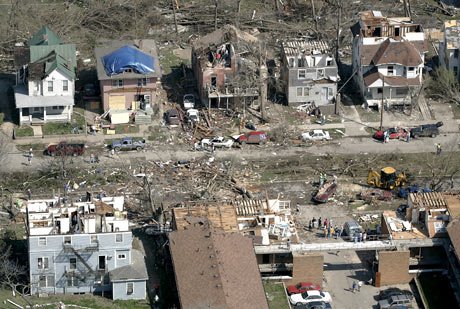
Tornado Iowa City


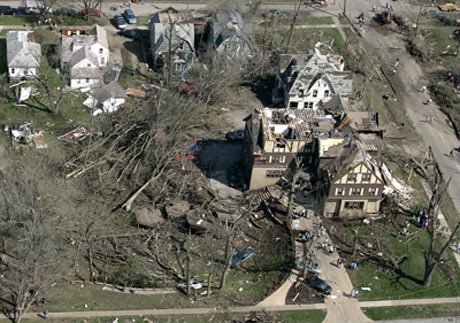
Use the posted images and the Fujita scale given in class to determine rating for the tornado that hit Iowa City, Iowa.

Wednesday, April 12, 2006

Salaries For 2005


What is the starting salary for a college graduate with a 4 year degree?

Wednesday, March 29, 2006

Astronomy: Earth Crossing Asteriods

An animation of asteriods tracks crossing the Earth's orbit. Yes, we could all die and any time. Have a nice day.

Earth Crossing Asteriod movie

Astronomy: Titan Images

Multiple Titan Image from JPL

Friday, February 17, 2006

Environmental Sciecne: Nuclear Waste Leak

An NPR story on the a leak at a local Nuclear Power Plant.

Nuclear Story

Environmental Sciecne: Global Warming

Another straw in the Global Warming Debate:

Greenland's Icesheet

Environmental Sciecne: Mudslide

Philippine Mudslide

CNN: Mudslide Story

One example of the violent world we live in.

Tuesday, February 14, 2006

Physics: How many transistors on a CPU

As mention in class:

The current AMD dual-core Athlon Processor has 154-233 Million transistor. An Intel Pentium D has 230 million transistors.

In the early 90's the pentium III had 100,000 - 10 million transistors.

In the early 80's the Intel 8086 had 5000-100,000 transistors.

Sources:

AMD

History of Computers

Environmental Sciecne: China's One Child Policy Protest

China's has always had a problem with the "One Child" program in the rural countryside. It seems someone is taking thing to the extreme.

NPR: Activist Protest

Listen to the audio clip.

Tuesday, February 07, 2006

Astronomy: Apollo Mission - Hammer and Feather Drop

As mentioned in class, he is David Scott doing Galileo's gravity experiment on the Moon.

Watch the Movie Clip 8 MB

This clip may take awhile to load.

College Physics Homwork

Chp.16: 1,4,5,8,12,13,17,22,26,30,31,33,34,35,40,57, and 59

Chp.17: 3,4,10,11,14,16,31,32, and 48

Thursday, January 26, 2006

Physics Homework

Engineering Physics Homework:

Chp. 23: 1,2,6,7,10,15,18,20,22,25,26,30,35,40,43, and 54.


College Physics Homework:

Chp. 15: 1,6,7,8,13,15,17,24,27,28,30,41,42, and 50.

Friday's Lab:

Electric Fields(Internet) Located on the lab manual website.

Friday, December 09, 2005

Environmental Science: Saving the Giant Catfish

You have got to see this fish!

The Search for the Giant Catfish

Please select the audio link as well.

Environmental Science: Honor Killings

After talking about Western and Non-Western Culture relating to environmental and social issues, I submit this link: Honor Killings

Please click on the audio link as well.

Monday, November 28, 2005

Environmental Science: Invasive Species

The Tamarisk (Salt Cedar) is an invasive plant from the Eurasian plains. It is current playing havoc in the Western United States.

NPR Audio Story: Tamarisk Taking Over Western States

Other Links:

Exotic Tamarisk on the Colorado Plateau

Alien Plant Invaders of Natural Areas

Invasive Species Info.gov

Environmental Science: Seattle and Greenhouse Gases

As mention in class, Seattle is try to control it's greenhouse gas emission.

NPR STORY: Seattle Tackles Greenhouse Gases

Click on the Audio Link.

Wednesday, November 02, 2005

Engineering and College Physics: Starting Salaries

Today I got off on a rant about strating salaries and the need for hard work in the sciences. After some digging I found sevral sites with current starting salaries based on degreee and major. Some even have good advice on what to expect during your job intereview.


Starting Salaries Expectations

Lucrative Salaries

Class of 2004 Starting Salaries

This last link is a pdf file and has information about chemistry majors. It even contains information on starting salaries based on grades.

Tuesday, November 01, 2005

Engineering and College Physics: House on the Rock


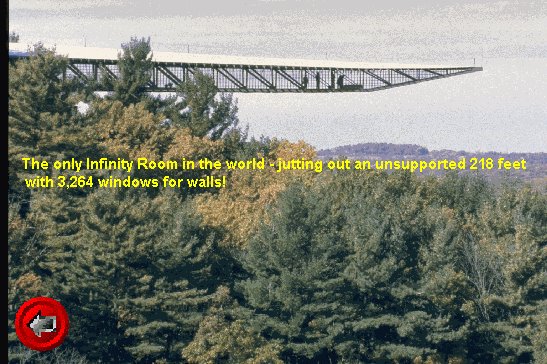
I mention House on the rock as an example of a cantilever structure. The picture is the Infinity room at House on the Rock. The house itself is interesting, but the whole complex can be quite the tourist trap. Go once in your life, spend a day, then flee. (The tour continues.... Trust me if you go to House on the Rock. Those three words are a slice of hell and a year later they are hysterically funny.)

Environmental Science: Clean Water For EL Salvador


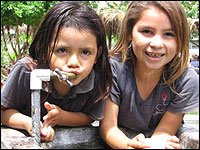
Contaminated water kills thousands of Salvadorans every year. Most are children.

You may read the whole story at NPR.org.

Environmental Science: Where is The Water Treatment Plant

Remember November 3rd is our tour of the Water Pollution Control Plant.

Where is it. Here is a Map.

You can find Direction from the college to the plant here: Directions

Sunday, October 23, 2005

General Science - 8th Grade Math

You Passed 8th Grade Math

Congratulations, you got 10/10 correct!

Thursday, October 20, 2005

Environmental Science: Bioengineering


As mentioned in class: A mouse with a Human ear "growing" on it's back.
The following is text from an email explaining this image.


Forwarded-by: bostic@bsdi.com (Keith Bostic)
Forwarded-by: Todd Kover

BOSTON (AP) -- It sounds like something from a carnival side
show: ``The Mouse With A Human Ear On Its Back.'' But it's real.
It's alive.
That mouse, and others of its kind, are at the leading edge of a
science known as tissue engineering, which allows laboratories to
grow skin and cartilage for transplant in humans.
The mouse in question, in the laboratory of University of
Massachusetts anesthesiologist Dr. Charles Vacanti, is helping
researchers refine the technology that someday will allow them to
regrow ears and noses for people.
Linda Griffith-Cima, an assistant professor of chemical
engineering at Massachusetts Institute of Technology who helped
Vacanti grow the first ears on mice, said she did it at the request
of a plastic surgeon from Children's Hospital, Dr. Joe Upton.
``He said, `I see these kids who are born without ears. And I
have boys who come in whose ears have been chewed off in playground
fights, and I can't sew them back on because they're so chewed
up,''' Griffith-Cima said.
So she set about creating an ear-like scaffolding of porous,
biodegradable polyester fabric. Then she and Vacanti distributed
human cartilage cells throughout the form, and implanted the
prototype ear on the back of a hairless mouse.
The mouse, specially bred to lack an immune system that might
reject the human tissue, nourished the ear as the cartilage cells
grew to replace the fiber. The mouse remains healthy and alive
after the ear is removed, the researchers said.
``You end up with a piece of cartilage in the shape of an ear,''
Griffith-Cima said.
Griffith-Cima's and Vacanti's research follows in the footsteps
of Vacanti's older brother, Dr. Joseph Vacanti, a surgeon who does
liver transplants at Children's Hospital, and his close friend Dr.
Robert Langer, professor of chemical engineering at MIT.
Twelve years ago, when Joseph Vacanti became head of the
hospital's transplant program, he started searching for ways to
grow new liver tissue in sick children instead of waiting for donor
organs. Too many of his patients died before they could get
transplants.
Now Joseph Vacanti can implant a polymer scaffolding in a
diseased rat's liver and transplant new liver cells. The new liver
will grow and function for up to six weeks, he said.
Langer, the Vicantis and other scientists now have managed to
grow liver, skin, cartilage, bone, ureters, heart valves, tendons,
intestines, blood vessels, and breast tissue on such polymers,
Langer said.
Although no such tissue products have yet become available to
the public, skin products are in the advanced stages of clinical
testing on humans, and heart valves are in the early phase of
clinical trials.
Someday, ears and noses will be grown in a test tube using the
patient's own cells on a custom-designed scaffold. Other tissues
will be grown from donated cells on polymer devices placed in the
patient's body.
``Some tissues, like cartilage, we can grow all the way to
perfect tissue before putting it in,'' Joseph Vacanti said. ``In
other tissues, we only grow it for a short time, then we implant it
and the body takes over.''
Dr. Michael Miller, an associate professor of plastic surgery at
the University of Texas' Anderson Cancer Center, said the
technology is promising.
``In fact, I think the next major advances to come in the field
of reconstructive surgery are going to be due to tissue
engineering,'' said Miller, who is working with Rice University
scientists trying to grow bone tissues in shapes that are useful
for plastic surgery.
The chemical engineers say their job now is to create better
polymers. It's one thing to grow cartilage that holds a shape for
cosmetic surgery, another to grow cartilage that could mend a
shattered knee, Griffith-Cima said.
Dr. Peter Theran, director of laboratory animal welfare for the
Massachusetts Society for the Prevention of Cruelty to Animals,
said he had not reviewed the Vacantis' research, but was not
opposed to it.
``Generally speaking, we support the use of tissue culture work
because often it means using fewer live animals'' than other
procedures, such as transplanting animal organs into humans.

Tuesday, October 18, 2005

Environmental Science: Water Treatment Plant Tours

The tours for the Water pollution Control Plant are set. Mark your calender: Thursday NOV. 3.

Tues-Thurs Classes: 9:30 AM Nov. 3
MWF Classes: 1:00 PM Nov. 3

Car pool and meet at the site!

Environmental Science: Exploding Snake!


The question is: "How does a Burmese Python get in the Florida Everglades?"

Friday, October 14, 2005

Environmental Science - Bears

I mention Timothy Treadwell in class as the freelance bear reseacher and watcher that was later killed by a bear.

His film and story are here : Grizzly Man

Friday, September 09, 2005

Environmental Science - The Miller and Urey Experiment


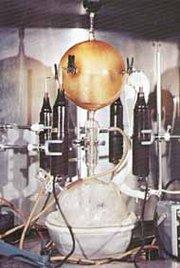
Here is an image from a Miller and Urey Experiment. Notice the discoloring in the main vessel.

Physics: The Atomic Cannon

As mentioned in class the U.S. built a artillery cannon capable of firing nuclaer shells. Pretty Cool. Check out the movies too!

Atomic Cannon

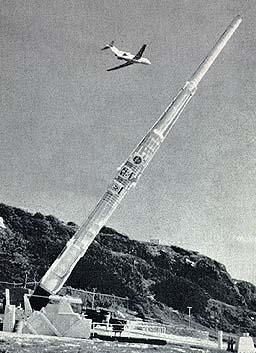
Physics: Projectile Motion and the HARP Project


Details on the HARP GUN and the life of Dr. Gerald Bull.

Another HARP GUN Link is here: The HARP Project

Saturday, August 27, 2005

Geology: Diamond Mining

As I mentioned in class there is a place in Arkansas that let you hunt for diamonds. The best part is you can keep whatever you find!

CRATER OF DIAMONDS STATE PARK

Thursday, August 25, 2005

WELCOME BACK!

Nice to see you again MCC students.

Just a Reminder: Labs start next week. That's the week of the 29th of August.

Tuesday, April 19, 2005

Spring 2005 Final Exam Schedule

Her is the Final Exam Schedule for my science classes.


College Physics 10 AM Monday May 16
Astronomy NOON Monday May 16
Environmental Science 8 AM Tuesday May 17
Meteorology 8 AM Wednesday May 18
Engineering Physics NOON Wednesday May 18

Remember Your Note Sheet(8-1/2 by 11), Calculator, #2 Pencil and Your Brian!

Tuesday, March 29, 2005

Biology and Anthropology: Human Evolution

I often mention the ancestor of Man in class. Here is a link to an activity on human evolution.

Human Evolution Activity

Environmental Science: Evolution and Extinction

Here is a little game I came across that provides a good demonstration of species adapting to changing in the environment.

NOVA ONLINE Game: Evolution in Action

Wednesday, March 16, 2005

Environmental Science: ANWR OIL Drilling

Let the Drilling Begin!

Congress OKs ANWR

It will probably take 10 years before the oil starts flowing. The ANWR oil fields are expected to generate 1 million barrels of oil a day. Hardly a dent in the world demand. Most of the oil will probably be exported for a higher price if the U.S. dollar stays weak.

Here is a timeline leading up to the vote today. ANWR TIMELINE

Just in time too, because Oil Price just hit a record high today at $55+ per barrel. OPEC met today to vote on increasing oil production, but it is in doubt whether or not that will help lower oil prices. Even, ANWR will probably not help with that because of record demand. Can you say get use to $2/gallon gasoline.

OIL Demand outpaces supply!